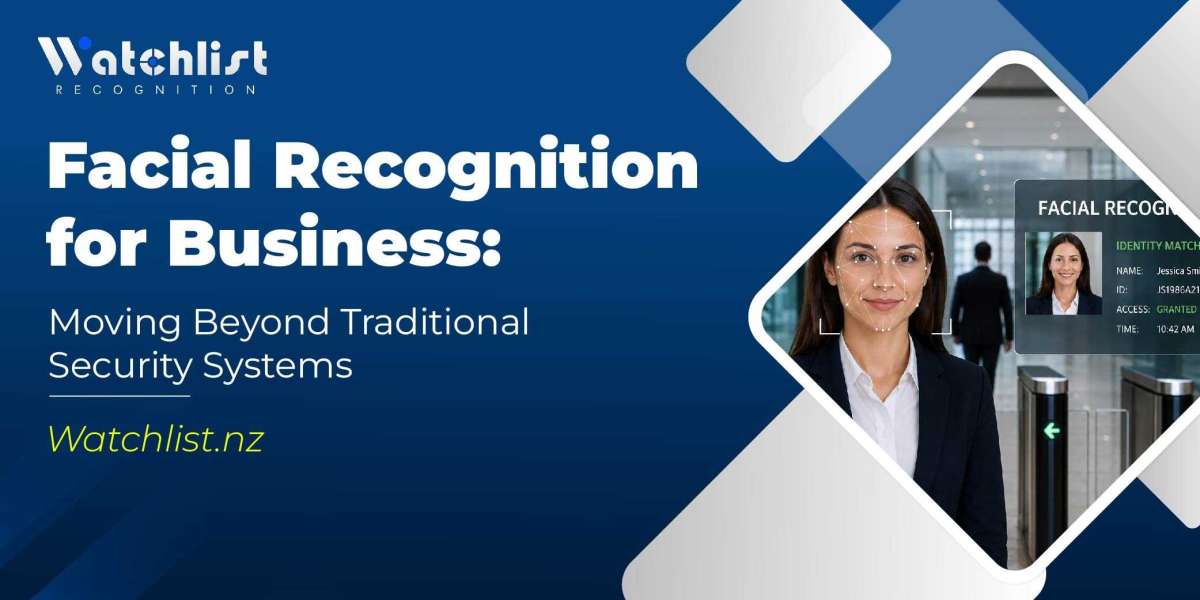

Modern commercial environments demand far more from security infrastructure than passive recording. Traditional closed-circuit television systems only document incidents after they occur, leaving frontline staff vulnerable to repeat offenders, inventory shrinkage, and unauthorized site access. To counter these challenges proactively, organisations across commercial retail, fuel logistics, and hospitality are adopting integrated recognition intelligence platforms. By bridging the gap between passive surveillance and active operational awareness, businesses can transform how they protect their physical premises.
Moving Beyond Reactive Surveillance
Historically, security management relied on retrospective reviews of video footage. When an incident occurred—whether shoplifting, fuel drive-offs, or aggressive behavior—managers spent hours scrubbing tapes to compile evidence. This reactive posture does little to protect staff during an active confrontation. Advanced platforms shift this paradigm by introducing real-time detection mechanisms. When a known individual or flagged vehicle enters a premises, automated notifications allow management and security teams to intervene or de-escalate before safety is compromised.
Integrating Facial Recognition and Vehicle Intelligence
Comprehensive situational awareness requires monitoring both pedestrian and vehicular access points. A robust facial recognition system allows security teams to identify individuals listed on internal trespass registers instantly. Simultaneously, integrating automatic number plate recognition ensures that vehicles associated with previous security incidents, supply chain theft, or unauthorized zone entry are flagged the moment they pull into a car park.
Unifying these capabilities onto a single software layer creates a seamless operational environment. Rather than toggling between disparate camera feeds and disconnected logs, operators gain a consolidated interface that handles pedestrian alerts, vehicle tracking, and incident documentation concurrently.
Prioritizing Privacy and Regulatory Alignment
Deploying biometric technology in commercial settings requires a strict commitment to data privacy, transparency, and governance. Organisations must evaluate whether their chosen facial recognition software adheres to local regulatory expectations, such as the New Zealand Privacy Act and evolving biometric processing standards.
Responsible deployment relies on several non-negotiable safeguards:
Explicit Purpose Limitation: Systems should be configured strictly for safety, security, and trespass enforcement rather than general behavioral tracking or marketing.
Automated Data Minimization: Non-matched facial data must be instantly purged to protect the privacy of everyday customers.
Human-in-the-Loop Verification: Automated alerts should always serve as notifications for human review, ensuring that trained staff make final operational decisions.
Encrypted Storage and Role-Based Access: Sensitive registers, such as trespass databases, must feature strict permission controls and encrypted data retention settings.
Organizations seeking to implement these measures should always secure appropriate professional and legal guidance tailored to their specific operational context. For those navigating these requirements, specialized solutions like Watchlist Recognition provide platforms engineered from the ground up for privacy-conscious commercial environments.
Streamlining Incident Management and Reporting
A key advantage of modern recognition technology is its ability to streamline administrative workloads following a security event. Centralized incident registers allow team members to log behavioral notes, timestamps, and media captures in a few clicks. When law enforcement or insurance providers require documentation, operators can generate comprehensive, evidence-ready incident packs in minutes rather than days. This frictionless reporting capability accelerates police investigations and strengthens corporate compliance.
Empowering Multi-Site Commercial Operations
Managing security across a single storefront presents distinct challenges, but multi-location enterprises face exponential complexity. Enterprise-grade platforms allow security leaders to synchronize watchlists across regional or national networks. If an individual is formally trespassed at one branch for aggressive behavior or high-value theft, that restriction can be securely propagated across all affiliated sites, preventing bad actors from simply migrating to a less-protected location.
Conclusion
Integrating recognition intelligence into everyday business workflows represents a major evolution in asset protection and staff safety. By moving past traditional, passive recording methods and adopting real-time, privacy-aware analytics, companies can create safer environments for both employees and patrons. To explore how structured recognition workflows can secure your physical operations, learn more or request a demonstration with Watchlist Recognition today.
Frequently Asked Questions
How does a recognition platform handle the data of everyday customers?
Standard visitors who do not match any active security or trespass register are not logged. Systems configured with privacy-first principles automatically and permanently delete non-matched biometric templates within seconds of capture.
Can vehicle tracking and pedestrian alerts operate on the same dashboard?
Yes. Modern platforms unify pedestrian detection and license plate monitoring into a single interface, giving operators complete visibility over both foot traffic and vehicle entry points.
What happens when the system detects a match on a trespass register?
When a match occurs, the system issues a real-time alert to designated staff. Trained personnel then manually verify the alert against internal protocols before taking appropriate, safe action, such as monitoring the individual or contacting local authorities.
Are these platforms suitable for multi-location businesses?
Yes. Enterprises operating across multiple regional sites can centralize their security data, synchronizing incident logs and trespass registers across all branches from a single administrative dashboard.
What kind of evidence can be exported for police or insurers?
Platforms generate comprehensive incident packages that include precise timestamps, high-resolution photo evidence, vehicle license plate data, and staff notes, formatted for immediate handover to law enforcement.