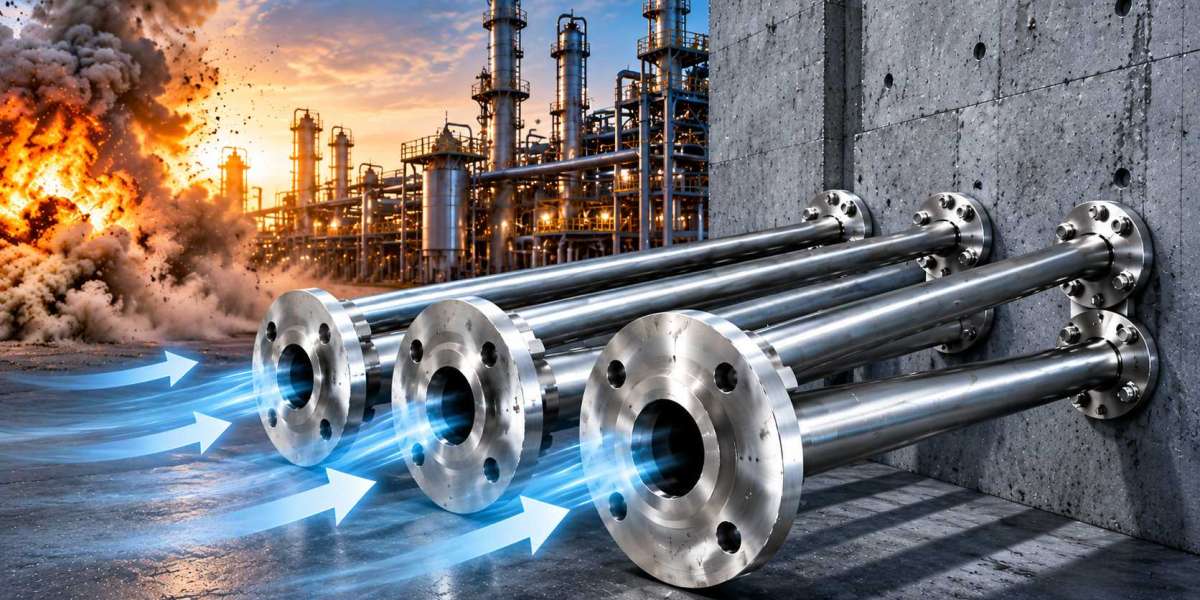

Without a properly engineered Blast Pipe, the wall penetration created for airflow could become a vulnerable point that weakens the entire protective structure. This is why blast pipe systems play such a critical role in secure facilities. They ensure safe ventilation while preserving structural integrity during extreme pressure events, making them an essential part of modern blast protection engineering.
What is a Blast Pipe System?
A Blast Pipe is a specially engineered ventilation component that allows air to pass through blast-resistant walls without reducing the wall's protective performance. Unlike conventional industrial pipes, it is designed to resist explosion pressure and reinforce one of the most sensitive parts of a blast-resistant structure—the ventilation penetration.
A complete blast pipe system includes not only the pipe itself but also compatible protective components that work together to maintain airflow while protecting occupants, equipment, and infrastructure. A well-designed Blast Resistant Pipe helps distribute blast loads, reduce stress around wall openings, and support the long-term reliability of the ventilation system.
How Blast Pipes Protect Facilities During an Explosion
When an explosion occurs, shock waves travel rapidly toward walls, doors, and ventilation openings. Standard industrial pipes are not designed for these extreme forces and may deform, crack, or transfer damaging loads into surrounding concrete.
Blast pipes are engineered differently. Their reinforced design absorbs and distributes blast energy across the structural wall, preventing excessive stress from concentrating at a single point. This controlled load distribution helps maintain the integrity of blast-resistant walls while allowing the ventilation system to remain functional wherever possible.
By protecting duct penetrations, blast pipes contribute significantly to the overall resilience of secure facilities.
Key Features That Improve Performance
The effectiveness of a blast pipe depends on a combination of engineering design and material quality.
Important features include:
- Reinforced steel construction for superior structural strength
- High resistance to explosion overpressure
- Optimized wall thickness based on project requirements
- Corrosion-resistant protective coatings
- Precision fabrication for accurate installation
- Long service life with minimal maintenance
The Sigma Power Tech Blast Pipe is designed to deliver dependable performance in demanding industrial, defense, and infrastructure applications where reliability is essential.
Integration with Protective Ventilation Systems
A blast pipe is only one part of a complete protective ventilation solution.
Modern secure facilities integrate blast pipes with:
- Blast valves that prevent pressure waves from entering protected areas
- Gas-tight valves that maintain airtight environments
- CBRN and NBC filtration systems that remove hazardous airborne contaminants
- Automated ventilation controls for emergency operation
- blast pipe exhaust systems that manage controlled airflow under normal and emergency conditions
When these components are engineered as one integrated system, ventilation continues to support facility operations without compromising blast protection.
Common Applications in Secure Facilities
Blast pipe systems are widely used wherever blast-resistant ventilation is required.
Typical applications include:
- Defense and military installations
- Underground shelters and command bunkers
- Chemical manufacturing plants
- Oil and gas refineries
- Nuclear and thermal power stations
- Critical government infrastructure
- Industrial manufacturing facilities
- Secure research laboratories
Each application requires different pressure ratings, structural configurations, and ventilation capacities, making project-specific engineering an essential part of system selection.
Factors That Influence Blast Pipe Pricing
Blast pipe systems are engineered products, so pricing depends on several technical factors rather than material cost alone.
Important considerations include:
- Steel grade and quality
- Wall thickness
- Pipe diameter and length
- Blast pressure rating
- Surface protection and coatings
- Product certification and testing
- Custom engineering requirements
- Integration with complete ventilation systems
Evaluating suppliers based solely on price can result in significant differences in long-term performance, maintenance costs, and overall facility protection.
Choosing Reliable Blast Pipe Manufacturers in India
Selecting experienced Blast Pipe Manufacturers in India is critical for ensuring dependable system performance.
A reliable manufacturer should offer:
- Expertise in blast protection engineering
- Custom design and fabrication
- Strict manufacturing quality control
- Technical consultation during project planning
- Product testing and engineering documentation
- Integration with complete blast-resistant ventilation systems
- Responsive after-sales technical support
Working with a specialist supplier helps ensure that the blast pipe system is designed to meet both structural and operational requirements.
Common Mistakes to Avoid
Several common procurement decisions can reduce the effectiveness of blast-resistant ventilation.
Avoid these mistakes:
- Using conventional industrial piping instead of engineered blast protection components
- Ignoring compatibility with blast valves and filtration systems
- Selecting products based only on purchase price
- Overlooking structural wall penetration requirements
- Purchasing components without technical documentation or certification
- Neglecting maintenance accessibility during system design
Careful planning during the early stages of a project significantly improves long-term safety and operational reliability.
Strengthen Your Facility's Protection
Take time to review your facility's ventilation safety setup and verify that every critical penetration is designed to withstand blast pressure.
If your facility is expanding or undergoing modernization, consider upgrading your blast protection systems to improve resilience against evolving operational risks.
Engineers, consultants, and facility managers should also explore more safety insights to stay informed about advances in blast-resistant ventilation technology and protective infrastructure.
Conclusion
A Blast Pipe system is far more than a reinforced section of ventilation ductwork. It is an engineered solution that protects duct penetrations, distributes explosion loads, and preserves the structural integrity of secure facilities during extreme pressure events. When integrated with blast valves, gas-tight valves, filtration systems, and controlled ventilation, a Blast Resistant Pipe becomes a key element of comprehensive blast protection.
Whether protecting military installations, underground shelters, power plants, chemical facilities, refineries, or other critical infrastructure, selecting the right system is essential. By partnering with experienced Blast Pipe Manufacturers in India and investing in proven solutions such as the Sigma Power Tech Blast Pipe, organizations can build resilient ventilation systems that safeguard people, equipment, and operations when protection matters most.