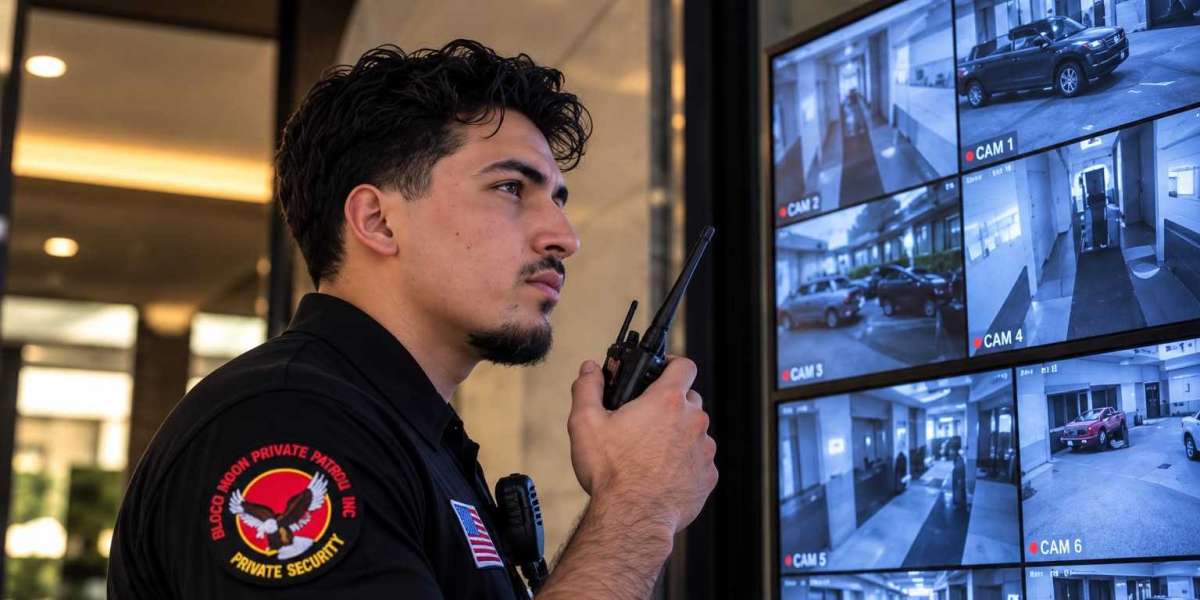

Campus security systems operate in one of the most challenging environments for physical protection: places that, by design, are open, heavily trafficked, and operationally diverse. A campus may include classrooms, laboratories, residences, athletic facilities, libraries, public access areas, and research or service areas, each with distinct access patterns and security implications.This means that campus security design shouldn't begin with uniform hardening. It should begin with how the institution uses the space, what incidents are of greatest concern, and how decisions are made in an emergency.
The opening is part of the design challenge
Unlike a closed industrial facility, many campuses are designed to receive large volumes of students, staff, visitors, and service providers every day. Therefore, an effective security system must facilitate selective control rather than outright exclusion.
This generally involves dividing the environment into:
- public circulation areas,
- buildings with partial control,
- restricted or high-impact spaces,
- and specific areas for events that change over time.
How a Security Company in California Helps Campus Security Systems Make Faster Decisions
A robust campus security system, supported by a professional security company in California, helps answer practical safety and security questions quickly and effectively.Is the event near a student residence, a research area, or an open public space? Does it warrant emergency notification, local verification, or support from law enforcement? What context should be preserved for reporting and subsequent review?That's where the operational platform matters. Institutions don't just need alerts. They need sufficient context to make decisions.
The risk on a campus changes according to the calendar and usage pattern.
Campuses do not have a single, stable operating pattern. Student arrivals in residences, exams, sporting events, research activities, holidays, construction, and scheduled visits all change the use of space and the types of incidents most likely to occur. A security design that assumes a single, fixed occupancy model can quickly become either ineffective or inefficient depending on the season.
That's why campus systems benefit from configurable operating modes and location-based rules. The campus must be able to treat the stadium area differently on game day than a quiet academic area during the holidays, or a research area facing an open pedestrian plaza. Monitoring is most useful when it reflects how the institution actually uses the space over time.
Governance and privacy must be explicit.
Educational environments face a unique governance challenge. They must balance security objectives with privacy expectations, institutional policies, and public scrutiny. This does not preclude the use of surveillance technologies, but it does require that deployments have a clear purpose, defined authority, and well-established rules for data retention and access.
In practice, this makes governance part of the system design. A campus that cannot explain why a sensor was installed, what problem it solves, who can review the data, and how long the records are kept is more likely to encounter internal resistance and inconsistent operation. Therefore, a useful campus architecture must be operationally efficient and institutionally defensible.
Communication and emergency verification must remain connected
Campuses typically have mass notification systems, emergency operations plans, and public safety reporting obligations. Security oversight should not be excluded from these functions. When an incident occurs, response teams need to know not only that something happened, but also what was observed, where it is happening, and whether it is escalating. Emergency managers also need sufficient verification to avoid misusing high-impact notification channels.
This is one reason why targeted monitoring is often more valuable than uniform coverage. By concentrating stronger detection and verification around high-impact buildings, event areas, or sensitive access points, a campus can decide sooner whether a situation requires mobilizing resources, issuing shelter-in-place alerts, requesting support from law enforcement, or simply conducting a local check.
How Security Guard Companies in Los Angeles Help Classify Campus Security Risks with Confidence in Open Environments
Open campuses will always contain a degree of ambiguity, as students move unpredictably, visitors cross public areas, and events can quickly alter traffic patterns. Professional security guard companies in Los Angeles help educational institutions manage these challenges through trained security personnel, effective monitoring, and timely responses to potential safety concerns.Security systems cannot completely eliminate this ambiguity, but they can help reduce indecisiveness.The true measure of success is whether campus teams can quickly distinguish between routine behavior, a developing incident, and a genuine emergency.This requires more than just sensors. It requires shared maps, location context, incident history, and sufficient operational discipline for different teams to interpret the same event consistently.Institutions that reach this level typically achieve better security outcomes without needing to harden every part of the campus equally.
Selective expansion is better than generalized hardening
Campuses tend to improve faster when they expand coverage around clearly defined needs, such as residences, research facilities, high-attendance events, or access points with known problems, rather than trying to apply the same controls everywhere at once. This phased approach is easier to govern, easier to explain internally, and generally provides better operational data for the next design cycle.