
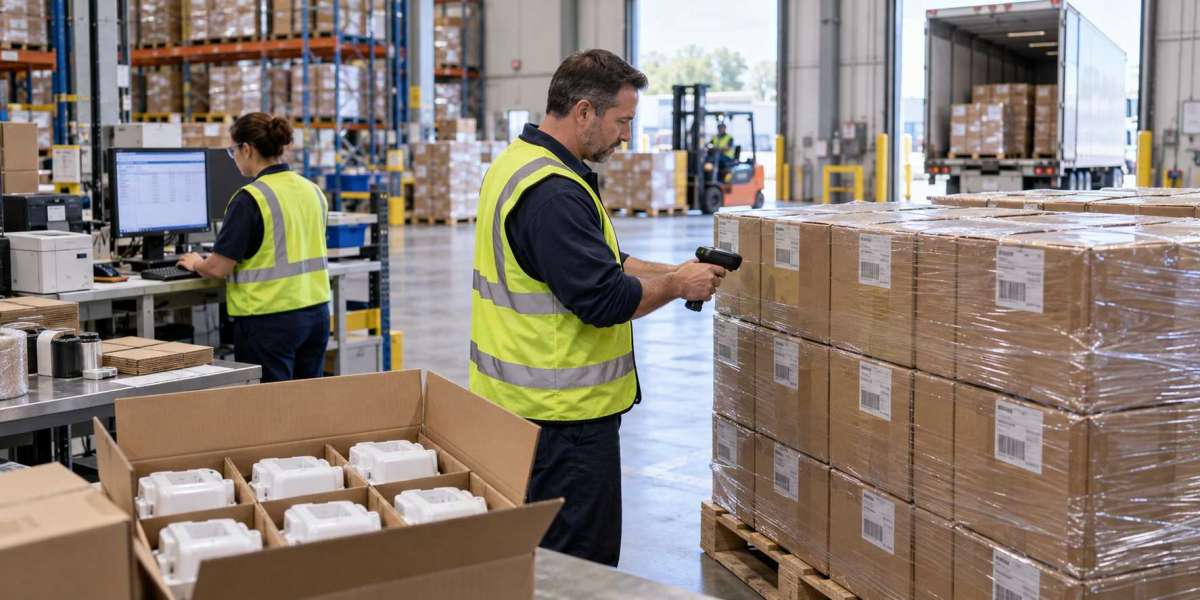

A molded component can meet its drawing requirements and still create problems if it arrives damaged, carries the wrong revision, or cannot be located when production needs it. Managing finished parts requires attention after manufacturing is complete.
Plastic component warehousing connects storage, inventory records, and scheduled deliveries. For US manufacturers and OEMs, the goal is straightforward: keep usable parts identifiable, protected, and available when the assembly schedule calls for them. That starts with decisions about handling, quantities, and responsibility.
What Is Plastic Component Warehousing?
Plastic component warehousing is the organized storage and management of manufactured plastic parts before assembly, shipment, or distribution. Depending on the agreed service, it may include receiving, labeling, stock tracking, order preparation, and dispatch.
It is different from storing plastic resin before processing. Finished components have their own geometry, packaging, revision, and acceptance requirements. A protective housing, decorative panel, and small molded clip may need different storage arrangements, even when supplied to the same customer.
Build Storage Around the Component
Protect Shape and Surface Condition
Start with the part drawing and the supplier’s handling recommendations. Consider whether parts can nest safely, whether contact could mark a visible surface, and whether unsupported sections need separation or support.
Choose bins, trays, dividers, or cartons accordingly. Establish packing quantities and stacking limits for the approved packaging. Do not assume every plastic component can withstand the same pressure, exposure, or storage conditions.
Define Environmental Requirements
Plastic component storage should reflect the material and finished application. Ask engineering or the supplier to identify any limits involving heat, sunlight, moisture, contamination, or nearby chemicals.
Avoid assigning one temperature or humidity specification to every part. Record any project-specific requirements and confirm that the proposed storage location can meet them.
Make Locations Easy to Understand
Give each storage position a clear identifier. Separate similar-looking components and different revisions. Industrial parts storage becomes easier to manage when employees can identify a location without relying on someone else’s memory.
Make Inventory Records Useful to Production
Plastic parts inventory management should distinguish physical stock from stock available for use. A carton awaiting inspection should not appear available for immediate shipment.
For each part, maintain the information needed for identification and allocation:
- Part number, description, and applicable revision.
- Storage location and quantity on hand.
- Quantity reserved for confirmed orders.
- Inspection or release status.
- Lot information when the customer requires it.
Define how partial cartons, returns, scrap, and transfers are recorded. Use cycle counts to compare selected physical stock with the records, prioritizing items with frequent movement or recurring discrepancies.
When a count differs, investigate the transaction that caused it. Repeatedly adjusting the number without correcting the receiving or picking process leaves the underlying problem unresolved.
Connect Stored Parts With Production Planning
Production planning needs a realistic view of usable inventory, scheduled demand, and replenishment timing. Review these together before ordering another manufacturing run.
The replenishment window may include material procurement, tooling availability, production, inspection, secondary operations, and transportation. Confirm which steps apply rather than relying only on machine time.
Choose buffer quantities according to demand variability and replenishment risk. Excess stock also creates exposure if a design changes or demand slows. Review inventory targets whenever delivery schedules, usage, or engineering requirements change.
Common Warehousing Problems and Practical Fixes
Similar Parts Get Mixed Together
Separate look-alike items physically and make distinguishing features visible on the label. Check the part number and revision during both receiving and picking. Color alone is a weak identification method.
Stored Parts Develop Handling Damage
Inspect packaging and storage arrangements before blaming the material. Check whether cartons are overloaded, components rub together, or workers must repeatedly repack the same stock. Revise the handling method with engineering input.
Older Revisions Remain Available
Create a formal disposition process when an engineering change takes effect. Identify which stock may still be used, which needs rework, and which must be held. Keep unapproved inventory separate from released parts.
Plan the Handoff From Storage to Shipment
Plastic parts fulfillment requires more than locating the right carton. Define order quantities, packaging, labels, destination details, and any documentation before the first shipment.
For assembly customers, a consistent carton quantity can simplify receiving and line replenishment. For multiple destinations, identify which packing and labeling instructions apply to each order.
Evaluate manufacturing warehousing through the complete handoff: receiving, storage, selection, packing, and dispatch. A clear process at each step makes discrepancies easier to trace and resolve.
Discuss Manufacturing and Warehousing Together
Vico Plastics, based in Janesville, Wisconsin, lists warehousing and production planning support alongside injection molding and secondary operations. Its services page provides a starting point for discussing Plastic Component Warehousing in relation to a manufacturing project. Vico Plastic Molding
Prepare your inquiry with part information, expected quantities, packaging needs, and delivery expectations. Ask which storage, inventory reporting, and release arrangements are available for your project. Confirm the agreed scope rather than assuming every warehousing program includes the same services.
Frequently Asked Questions
What does plastic parts warehousing include?
It can include receiving, storage, inventory tracking, picking, packing, and shipping. The actual scope depends on the agreement. Specify whether inspection, lot tracking, relabeling, or assembly preparation is also required.
Do all plastic parts need the same storage conditions?
No. Requirements depend on the material, geometry, finish, packaging, and application. Obtain component-specific guidance rather than applying resin storage instructions or generic environmental limits to every finished part.
How can manufacturers improve inventory accuracy?
Record stock movements promptly, separate unavailable inventory, and perform targeted cycle counts. Investigate recurring discrepancies at their source, including receiving errors, unrecorded transfers, mixed revisions, and incorrect picking quantities.
Can warehousing help reduce production interruptions?
It can improve availability when stocking levels, replenishment timing, and production demand are coordinated. Stored inventory alone does not prevent shortages; accurate records, approved parts, and clear release instructions are also necessary.




