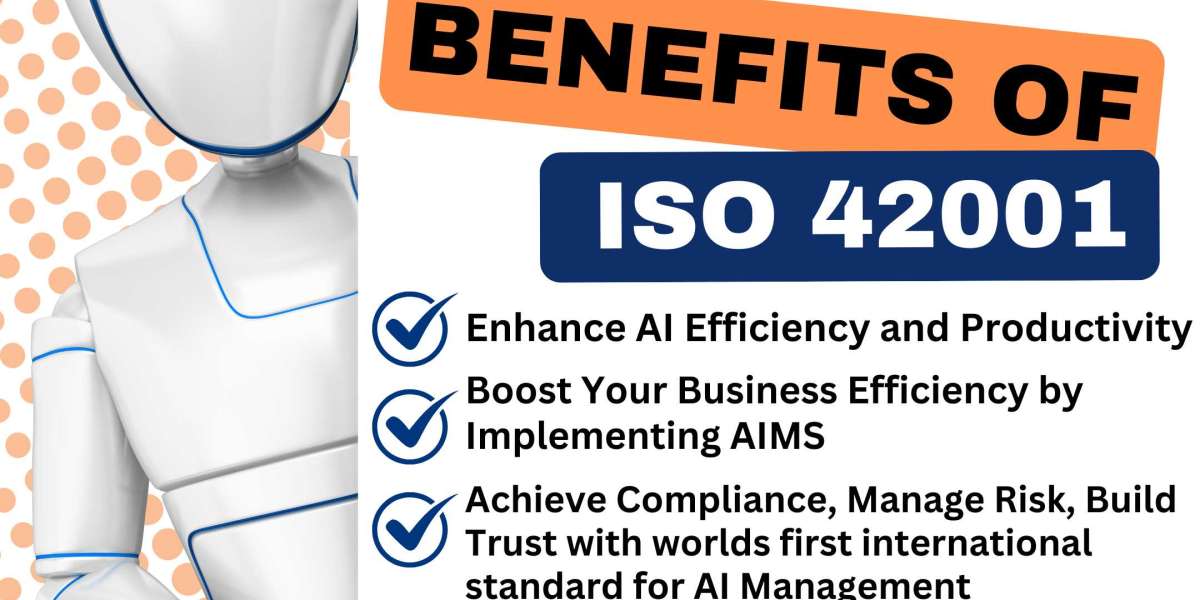

ISO 42001 Certification in Bahrain Artificial Intelligence (AI) technologies are transforming industries worldwide — from healthcare diagnostics and financial services to smart cities and autonomous systems. As organizations in Bahrain adopt AI to enhance efficiency, innovation, and competitiveness, they must also address growing concerns around safety, ethics, transparency, and accountability. ISO 42001 Certification provides a globally recognized framework to implement AI systems responsibly, with governance and risk controls that build trust and comply with emerging standards.
What Is ISO 42001 Certification?
ISO 42001 is an international standard designed to help organizations establish, implement, maintain, and continually improve Artificial Intelligence Management Systems (AIMS). It provides a structured approach for governing AI development and use, ensuring that AI systems are safe, ethical, transparent, and aligned with stakeholder expectations.
ISO 42001 is applicable to organizations of all sizes and across sectors — including technology firms, financial institutions, healthcare providers, government agencies, education, retail, and industrial companies — anywhere AI technologies are developed or deployed.
Unlike technical AI safety standards that focus on model architecture or performance, ISO 42001 focuses on management systems: policies, governance, risk assessment, roles and responsibilities, documentation, and continuous monitoring of AI use.
Why ISO 42001 Matters in Bahrain
Bahrain is rapidly positioning itself as a digital and innovation hub in the Gulf region. The national vision emphasizes diversification, smart city initiatives, fintech adoption, healthcare digitization, and advanced analytics — all areas where AI plays a significant role. However, with AI’s rapid adoption come risks such as:
- Bias or unfair outcomes in decision‑making
- Lack of transparency in automated processes
- Safety risks in high‑stakes environments
- Legal and regulatory exposure
- Loss of stakeholder trust
ISO 42001 certification helps organizations in Bahrain balance innovation with responsible governance. It enables companies and public sector entities to adopt AI confidently while protecting individuals’ rights, meeting regulatory expectations, and honoring ethical principles.
Key Benefits of ISO 42001 Certification
1. Ethical and Responsible AI Implementation
ISO 42001 ensures AI systems are designed and used in ways that respect human rights, fairness, explainability, and ethical considerations. This reduces reputational risk and enhances stakeholder trust.
2. Improved Risk Management
By integrating AI governance into organizational processes, ISO 42001 helps identify and mitigate risks throughout the AI lifecycle — from design and data sourcing to deployment and monitoring.
3. Enhanced Regulatory Preparedness
As data protection, AI governance, and algorithmic accountability laws evolve globally (including in the GCC region), ISO 42001 positions organizations to align with current and future regulatory expectations.
4. Operational Efficiency and Quality
Standardized documentation, clarity in roles, and systematic monitoring improve how AI initiatives are executed, reducing errors and enhancing outcomes.
5. Competitive Advantage
ISO 42001 certification signals corporate maturity and trustworthiness, helping Bahrain’s organizations win contracts, attract partners, and expand into international markets where ethical AI is required.
Core Components of ISO 42001
ISO 42001 Implementation in Bahrain centers on establishing an AI Management System (AIMS) rooted in the standard management system structure (similar to ISO 9001):
? Governance and Leadership Commitment
Senior leadership must define an organization’s AI strategy, ethics principles, and oversight responsibilities.
? Risk and Impact Assessment
Identify AI‑specific risks (bias, safety, privacy, security) and evaluate the potential impact on stakeholders and operations.
? Policies and Procedures
Develop documented policies covering AI development, data management, validation, transparency, accountability, and continuous monitoring.
? Roles and Competencies
Assign AI governance roles and ensure personnel have the necessary skills and training.
? Lifecycle Management
Integrate risk controls and quality checks throughout the AI lifecycle: design, training, validation, deployment, and decommissioning.
? Monitoring and Metrics
Define key performance indicators (KPIs) and monitoring systems to detect drift, bias, or unexpected behavior in AI systems.
? Audit and Improvement
Conduct periodic internal audits and management reviews to drive continuous improvement.
ISO 42001 Certification Process in Bahrain
Achieving ISO 42001 certification typically involves these steps:
- Gap Analysis
Assess current AI practices against ISO 42001 requirements to identify areas of improvement. - AI Management System Design
Develop policies, procedures, and governance structures reflective of ISO 42001’s principles. - Implementation and Training
Roll out the AI management processes and train stakeholders on roles, responsibilities, and compliance. - Internal Audits and Risk Reviews
Evaluate system performance, identify non‑conformities, and refine controls. - Management Review
Top management reviews system effectiveness and sets strategic goals. - Certification Audit
An accredited certification body conducts an external audit. Upon successful completion, the organization is awarded ISO 42001 certification.
Who Should Pursue ISO 42001 in Bahrain?
ISO 42001 is relevant for organizations that:
- Develop or deploy AI/ML systems
- Use automated decision‑making in operations
- Process large volumes of personal or sensitive data
- Are part of digital transformation initiatives
- Must comply with international governance or tender requirements
Examples include:
- Fintech and banking
- Healthcare and medical diagnostics
- Telecommunications
- Smart city and IoT services
- Education technology
- Government and public services
- Manufacturing and automation
ISO 42001 and Other Standards
ISO 42001 complements — and can integrate with — other management standards:
- ISO 9001 (Quality Management)
- ISO 27001 (Information Security)
- ISO 27701 (Privacy Information Management)
- ISO 31000 (Risk Management)
Together, these standards create a robust ecosystem of governance, security, and quality.
Conclusion
ISO 42001 Certification Consultants in Bahrain is not just about ticking a compliance box. It is a strategic asset that promotes ethical AI governance, strengthens risk management, enhances trust, and prepares organizations for future regulatory and market demands. As AI continues reshaping business and public services, ISO 42001 equips Bahraini organizations with the tools and confidence to adopt AI responsibly and sustainably.