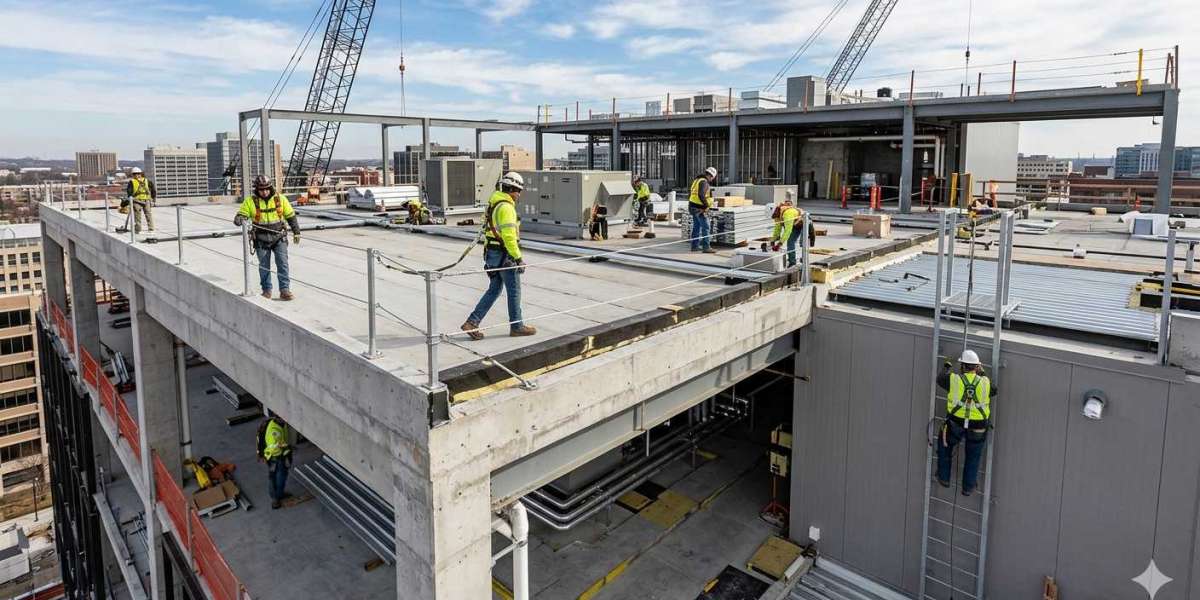

Working at heights presents significant safety risks, making fall protection a critical requirement across construction, maintenance, roofing, and industrial projects. One of the most effective passive safety solutions for low-slope rooftops is the warning line system. Designed to establish a visible boundary around hazardous roof edges, warning line systems help workers identify safe work zones and reduce the risk of accidental falls.
This guide explains what warning line systems are, how they work, where they are used, and why they are an essential part of workplace safety.
What Is a Warning Line System?
A warning line system is a passive fall protection solution consisting of highly visible ropes, chains, wires, or synthetic lines supported by stanchions. The system creates a clearly marked boundary that alerts workers when they are approaching an unprotected roof edge or another fall hazard.
Unlike active fall protection systems that require workers to wear harnesses and connect to anchor points, warning line systems provide a visual and physical reminder to remain within designated safe work areas. They are commonly used on low-slope roofs during construction, inspection, maintenance, and repair activities.
How Does a Warning Line System Work?
The primary function of a warning line system is to establish a controlled work zone. The warning line is installed at a specified distance from the roof edge, creating a safe area where employees can perform their tasks without working directly adjacent to fall hazards.
The system generally includes:
- Highly visible warning lines or ropes
- Stable stanchions or posts
- Weighted bases or secure mounting systems
- High-visibility flags placed at regular intervals
By clearly identifying hazardous areas, workers are constantly reminded to remain inside the protected zone unless additional fall protection measures are used.
Where Are Warning Line Systems Used?
Warning line systems are suitable for a variety of commercial and industrial applications, particularly on low-slope rooftops.
Common applications include:
- Commercial roof maintenance
- HVAC installation and servicing
- Solar panel installation
- Roof inspections
- Waterproofing projects
- Building maintenance
- Industrial facility maintenance
- Construction projects
They are especially useful when workers spend extended periods on rooftops and need a simple, efficient method to maintain awareness of roof-edge hazards.
Benefits of Installing a Warning Line System
Improved Worker Safety
The most important advantage of a warning line system is enhanced worker safety. Clearly marked boundaries reduce the likelihood of employees unintentionally approaching dangerous roof edges.
Cost-Effective Fall Protection
Compared to more complex engineered fall protection systems, warning line systems are relatively affordable. They offer an economical solution for organizations seeking to improve rooftop safety while complying with workplace regulations.
Quick Installation and Removal
Many warning line systems are portable and easy to install without permanently modifying the roof structure. This makes them ideal for temporary projects, inspections, and maintenance work.
Increased Productivity
Because workers can easily identify designated work zones, they spend less time setting up equipment and more time completing their tasks efficiently.
Flexible for Different Worksites
Modern warning line systems can be configured to accommodate various roof layouts, making them suitable for different building sizes and project requirements.
OSHA Requirements for Warning Line Systems
In the United States, warning line systems are regulated by the Occupational Safety and Health Administration (OSHA). OSHA outlines specific requirements regarding system height, visibility, strength, and placement to ensure adequate worker protection.
Some general requirements include:
- The warning line should be highly visible.
- It must be supported by stable stanchions.
- The line should be positioned at a safe distance from roof edges.
- Flags should be installed at regular intervals for increased visibility.
- The system should withstand normal workplace conditions without collapsing.
Employers should always ensure that warning line systems meet applicable OSHA standards and are installed according to manufacturer guidelines.
Best Practices for Using Warning Line Systems
To maximize effectiveness, organizations should follow several best practices:
- Inspect the system before each use.
- Ensure all workers understand the designated safe work zone.
- Replace damaged ropes, flags, or stanchions immediately.
- Never move or adjust warning lines without authorization.
- Combine warning line systems with additional fall protection when required for higher-risk tasks.
- Conduct regular safety training for rooftop workers.
Proper installation and employee awareness are equally important for maintaining a safe working environment.
Choosing the Right Warning Line System
Selecting the right warning line system depends on several factors, including:
- Roof size and configuration
- Type of work being performed
- Frequency of rooftop access
- Environmental conditions such as wind exposure
- Compliance requirements
- Portability versus permanent installation needs
Choosing a high-quality system that meets safety standards helps ensure long-term reliability and worker protection.
Conclusion
A warning line system is an effective and practical solution for improving rooftop safety while helping organizations comply with fall protection regulations. By creating clearly defined safe work zones, these systems reduce the risk of falls, improve worker awareness, and support efficient project completion.
Whether used for roofing, maintenance, HVAC servicing, or construction, warning line systems remain an essential component of a comprehensive fall protection program. When properly installed, regularly inspected, and combined with worker training, they contribute significantly to creating a safer and more productive workplace.